
Mondly: Learn 41 Languages
Mondly by PearsonEducation
4.514.24K Reviews
- Version
- 10.41.4.3
- Installs
- 50.00M
- Age Rating
- Everyone
Screenshots
Our Review of Mondly: Learn 41 Languages
 Analysis by Appyee
I find Mondly: Learn 41 Languages most useful when I treat it as a small, repeatable speaking practice rather than a complete language course. It is an education app from Mondly by Pearson, and its broad language selection makes it easy to explore a new language without committing to a classroom routine. The experience is inviting, but the real question is whether its short lessons and conversation exercises match the way you want to learn.
A routine that fits ordinary days
My preferred baseline is simple: choose one language, complete a short lesson, then say a few of the phrases aloud again without looking at the screen. That last step matters. Tapping through a lesson can feel satisfying, but trying to recall a phrase from memory is a better check on whether it stuck. I would use Mondly during a quiet commute, a lunch break, or while waiting for an appointment, when a long study session is unrealistic.
A realistic example is preparing for a weekend trip. I might practise greetings and food-related expressions during the week, then revisit the phrases before going out. The app’s emphasis on practical situations gives that practice a clear purpose. I would still write down a few phrases I expect to need, because a lesson completed in a relaxed setting does not guarantee that the words will come quickly in a noisy café.
Make speech practice work for you
The speaking exercises are most valuable when I use them as a low-pressure rehearsal, not as a final judgement of my accent. Speech recognition can help me notice when an attempt needs another try, and repeating a phrase gives me a chance to adjust its sounds. But a successful recognition result is not the same as being understood by a person in every situation. I would use the feedback to practise, then listen to native speech elsewhere if natural rhythm and varied accents are important to my goal.
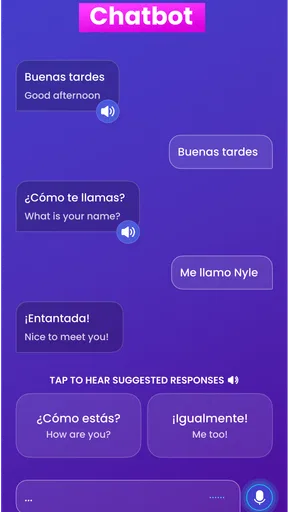
One useful habit is to repeat a new sentence once at normal speed and once more slowly, paying attention to the parts I tend to rush. I would also revisit troublesome phrases on a later day instead of drilling them until they feel familiar in the moment. This separates short-term recognition from recall. The chatbot-style conversation practice can make it easier to start speaking without the embarrassment of a live audience, though it is not a substitute for the unpredictable back-and-forth of a real conversation.
Settings and choices worth checking
Before building a routine, I would check the selected language and lesson level carefully. With so many languages available, it is easy to be enthusiastic about switching between them, but frequent switching can scatter attention. For a beginner, sticking with one language long enough to build a base is usually more useful than sampling several courses in the same week. If you already know some of the language, choose material that feels appropriately challenging rather than repeating only the easiest phrases.
It is also worth checking how the app handles speaking practice in your surroundings. A quiet place makes it easier to focus on pronunciation and use voice features without feeling self-conscious. If you are somewhere noisy or cannot speak aloud, a listening or reading-focused session may be a more practical choice. I would not force a speaking exercise in a setting where I cannot hear the prompt clearly; saving it for later is better than turning the lesson into guesswork.
For learners who like external accountability, daily challenges and leaderboards can add a nudge. I would treat them as reminders to show up, not as a measure of language ability. A streak or competitive score can reward consistency, but it cannot tell you whether you can follow a conversation or retrieve a phrase under pressure. The best setting is ultimately the one that supports a sustainable routine rather than making practice feel like another obligation.
Where it sits among language-learning options
Compared with a textbook-led course, Mondly feels more immediate: it puts short prompts and practical phrases in front of you instead of asking you to work through long explanations first. That can be a good fit when you want to begin speaking early or need a compact practice tool. The trade-off is that learners who want detailed grammar instruction, extensive written exercises, or a carefully explained progression may prefer a more structured course or use one alongside it.
Compared with conversation exchanges or a tutor, the app offers a less intimidating place to rehearse, and you can practise without arranging a time with another person. But live partners can ask unexpected questions, clarify misunderstandings, and expose you to natural conversation in a way scripted practice cannot. I see Mondly as useful preparation for those interactions, not a replacement for them. A strong combination is brief app practice during the week and occasional real conversation when your goal is confidence speaking with people.
The app is free to start, with in-app purchases ranging from $0.49 to $249.90 per item, so I would check what is included before paying for anything. Its average rating is 4.5 from 922K ratings, and it has 10M+ installs, which suggests it has reached a wide audience, though popularity alone cannot tell you whether its teaching style suits you. It is rated for Everyone. The current version is 10.35.1, and it requires Android 10 or later; iOS availability may differ by device and store.
Who will get the most from it
I would recommend Mondly to beginners who want a friendly entry point, travellers collecting useful phrases, and busy learners who are more likely to practise in short bursts than sit down for a long lesson. Its range of languages is another practical advantage if you are choosing between less commonly studied options or simply want to compare courses before settling on one. The app can also help returning learners shake off rust by giving them a manageable way to speak and listen again.
I would be more cautious if you need a full academic syllabus, detailed explanations of grammar, or reliable preparation for a formal language exam. In those cases, a dedicated course, teacher, or exam-focused resource is likely to provide a clearer path. Likewise, someone who already speaks comfortably may find beginner-oriented prompts too easy unless the available lessons meet their level. It is sensible to test the teaching style before making it the centre of a serious study plan.
Learning that lasts beyond a lesson
I’d use this section to connect practice with recall, because recognizing a phrase during a lesson is different from producing it later without a prompt. A small review list built around expressions you genuinely expect to use can make those brief sessions more purposeful. That also sets up a useful distinction: motivation helps you return, but steady progress comes from what you can remember and apply.
Turn short sessions into useful review
One way to get more from bite-sized lessons is to connect each session to something you will actually do. After practising a food-related exchange, for example, I would try to recall the key expressions later while looking at a menu, rather than opening another lesson immediately. This creates a small retrieval test without requiring extra materials. If I cannot remember a phrase, that gives me a precise reason to revisit it instead of vaguely repeating an entire topic.
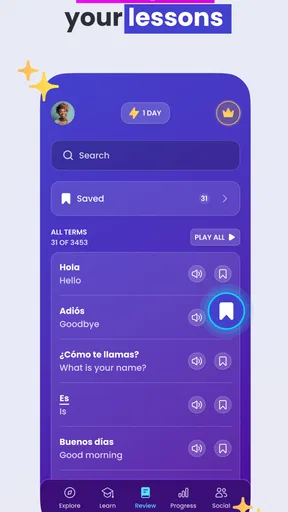
I would also keep a modest personal list of phrases that feel useful or difficult. The point is not to duplicate the app’s course, but to make a short review queue for moments when opening a full lesson is inconvenient. A few handwritten or typed prompts can reveal whether I remember meaning as well as sound. This is especially helpful when a phrase appears familiar on screen but is hard to produce independently.
Keep motivation in perspective
Challenges can help establish a habit, yet I would avoid letting a leaderboard dictate what counts as progress. On a crowded day, a short focused session may be more valuable than chasing a score while distracted. When I have more time, I would use it for careful listening and speaking practice rather than simply completing more screens. That distinction helps the app remain a tool for learning, not a task list that I finish for its own sake.
The augmented-reality and virtual-reality elements may appeal to learners who enjoy a more immersive presentation, but I would treat them as optional ways to engage rather than the foundation of a study plan. A visual feature can make a vocabulary moment memorable; it does not remove the need to recall words later or use them in varied contexts. If those modes are not convenient for your device, space, or routine, the core lesson and speaking practice still provide the more practical path.
Know when another method is better
For a learner who wants to understand why a sentence is built a certain way, a grammar reference or teacher can answer questions that quick practice may leave open. For someone who needs to speak spontaneously, a tutor or language exchange offers the essential unpredictability of another person. Mondly can prepare you with phrases and lower the barrier to speaking, but I would not mistake scripted confidence for conversational fluency.
There is also a difference between collecting languages and making progress in one. The choice of many courses is appealing, but starting several at once can make it hard to remember what you have learned. I would pick one main language for a few weeks, set a modest schedule, and only add another when the first routine feels stable. If your interest is purely exploratory, switching around is fine; if your aim is usable ability, consistency will matter more than variety.
My verdict on Mondly
For me, Mondly works best as an approachable daily practice companion: quick to open, focused on useful exchanges, and comfortable enough for making early speaking attempts. Its strongest role is helping a learner build momentum and rehearse common situations. I would pair it with listening to real speakers, a grammar resource when explanations matter, or live conversation when confidence needs to be tested outside the app.
At no cost to begin, it is reasonable to try the lessons and see whether their format keeps you returning. Paid items make it worth checking the purchase details before committing, especially if you are comparing it with a course that better matches a specific exam or proficiency goal. My advice is to choose one language, practise aloud when you can, and use each lesson as a starting point for recall in daily life. If that sounds like the kind of structure you need, this is a solid place to begin; if you need deep instruction or human conversation first, another resource should lead your plan.
First Impressions
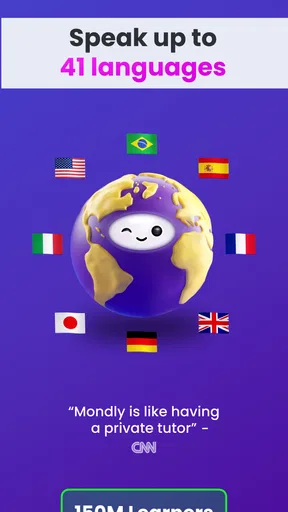
Downloading Mondly was a breeze. The app's interface is clean, colorful, and inviting, immediately setting a welcoming tone. No overwhelming menus or confusing navigation here—just a straightforward pathway to picking up a new language. I started with Spanish, but with 41 languages on offer, you’re spoiled for choice.
What caught my attention right off the bat was how intuitive everything felt. The app uses a combination of gamification and real-life scenarios, making language learning feel less like a chore and more like a fun, interactive journey. Plus, the use of modern technology like augmented reality and speech recognition adds a futuristic twist.
Learning by Doing
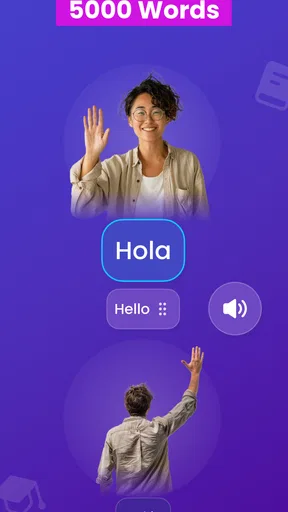
One of the standout features for me is the emphasis on practical conversations. From day one, you’re encouraged to speak and listen, mimicking everyday interactions. It’s not just about memorizing words and phrases; it’s about understanding context and usage.
The app cleverly integrates a chatbot that allows you to practice speaking. It’s like having a conversation with a native speaker, minus the fear of making mistakes. The speech recognition feature provides instant feedback, helping you fine-tune your pronunciation.
Diving Deeper
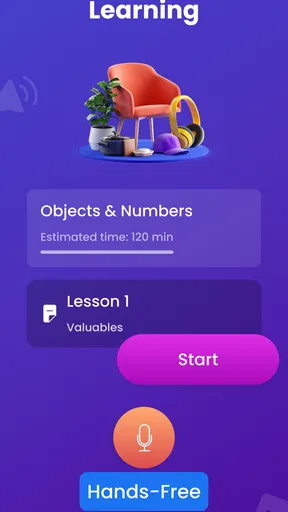
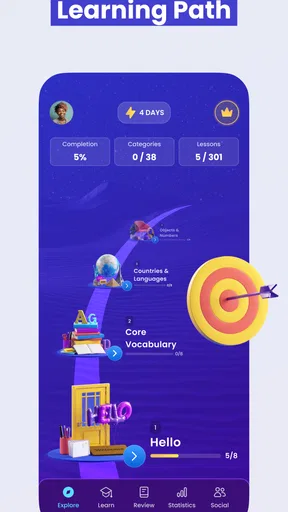
For those who love structure, Mondly offers a beautifully organized curriculum. Lessons are bite-sized, making it easy to fit learning into your daily routine. Whether you’ve got five minutes on the subway or half an hour before bed, there’s always time for a quick lesson.
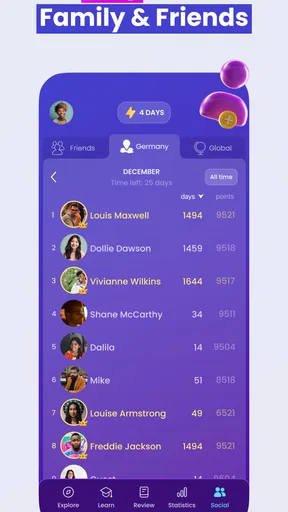
And if you're the competitive type, you’ll appreciate the daily challenges and leaderboards. They provide that extra nudge to keep you motivated and engaged. Nothing like a little friendly competition to spice things up!
Tech-Savvy Learning
What really sets Mondly apart is its use of cutting-edge technology. The app’s AR feature allows you to visualize words in the real world, making vocabulary more memorable. It’s one thing to read about a table; it’s another to see the word “table” appear on your own dining room furniture.
Additionally, the app’s VR experience takes it up a notch. It’s like being teleported to a different country, where you can immerse yourself in the language and culture without leaving your living room. Pretty neat, right?
Beyond the Basics
While Mondly is fantastic for beginners, it doesn’t leave advanced learners hanging. The app offers courses for various proficiency levels, so as your skills grow, Mondly grows with you. There are even specialized courses for business, travel, and other specific needs.
Moreover, the app keeps things fresh with regular updates and new content, ensuring you’re never stuck with stale information. It’s a dynamic learning environment that adapts to your pace and interests.
Final Thoughts
In a world where time is precious and distractions are plenty, Mondly: Learn 41 Languages stands out as a versatile and engaging language-learning tool. Whether you’re a complete newbie or a seasoned linguist looking to add another language to your repertoire, Mondly has something to offer.
It’s more than just an app; it’s a passport to new cultures and experiences. So why not take the plunge and see where Mondly can take you? Who knows, you might just find yourself ordering tapas in Madrid or negotiating deals in Tokyo with newfound confidence.
Verdict
Strengths of Mondly: Learn 41 Languages
- User-friendly interface for easy navigation.
- Wide variety of languages to choose from.
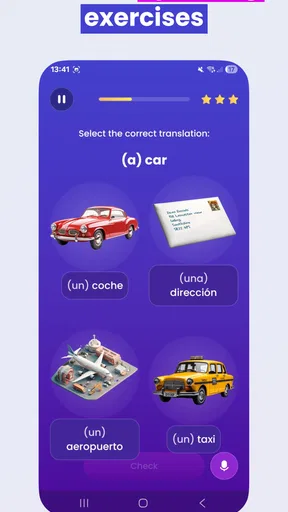
- Interactive exercises make learning engaging.
- Speech recognition enhances pronunciation skills.
- Daily lessons encourage consistent practice.
Limitations of Mondly: Learn 41 Languages
- Requires internet connection for full features.
- Limited content in free version.
- Some languages lack advanced lessons.
- Occasional app crashes reported by users.
- Voice recognition can be inconsistent.
Similar Picks in This Category
View All
Duolingo: Language Lessons
Duolingo4.7

Google Classroom
Google LLC2.8

Unacademy: Learn & Crack Exams
Unacademy3.2

Bible App for Kids
Life.Church4.4

Cake - Learn English & Korean
Cake Corp.4.7

Brainly: AI Homework Helper
Brainly4.5
Frequently Asked Questions
What is Mondly and how does it work?
Mondly is a language learning app that offers courses in 41 different languages. It uses advanced technology, including speech recognition and chatbot conversations, to help users practice speaking, listening, and writing. The app provides daily lessons, quizzes, and interactive exercises to enhance vocabulary and grammar skills effectively.
Is Mondly suitable for beginners and advanced learners?
Yes, Mondly is designed for both beginners and advanced learners. It offers a range of difficulty levels, allowing users to start from the basics or jump into more advanced lessons. The app adapts to the learner’s pace, providing a personalized learning experience that can cater to different proficiency levels.
How much does Mondly cost, and are there any free features?
Mondly offers both free and premium content. The free version provides access to basic lessons and daily exercises. For a more comprehensive experience, users can opt for a subscription, which unlocks all features, including advanced lessons and additional languages. Pricing varies, and there's often a trial period available to explore premium features.
Can Mondly be used offline?
Yes, Mondly offers offline capabilities for premium subscribers. Users can download lessons to their device, allowing them to continue learning without an internet connection. This feature is particularly useful for travelers or those with limited internet access, ensuring uninterrupted language practice.
Does Mondly provide certifications after course completion?
Mondly does not currently offer official certifications or diplomas upon course completion. However, it provides progress tracking and assessments to help users gauge their learning achievements. While it’s an effective tool for language practice, those seeking formal certification may need to consider additional resources.
